Energy · Industry
Preparing responses to calls for tender
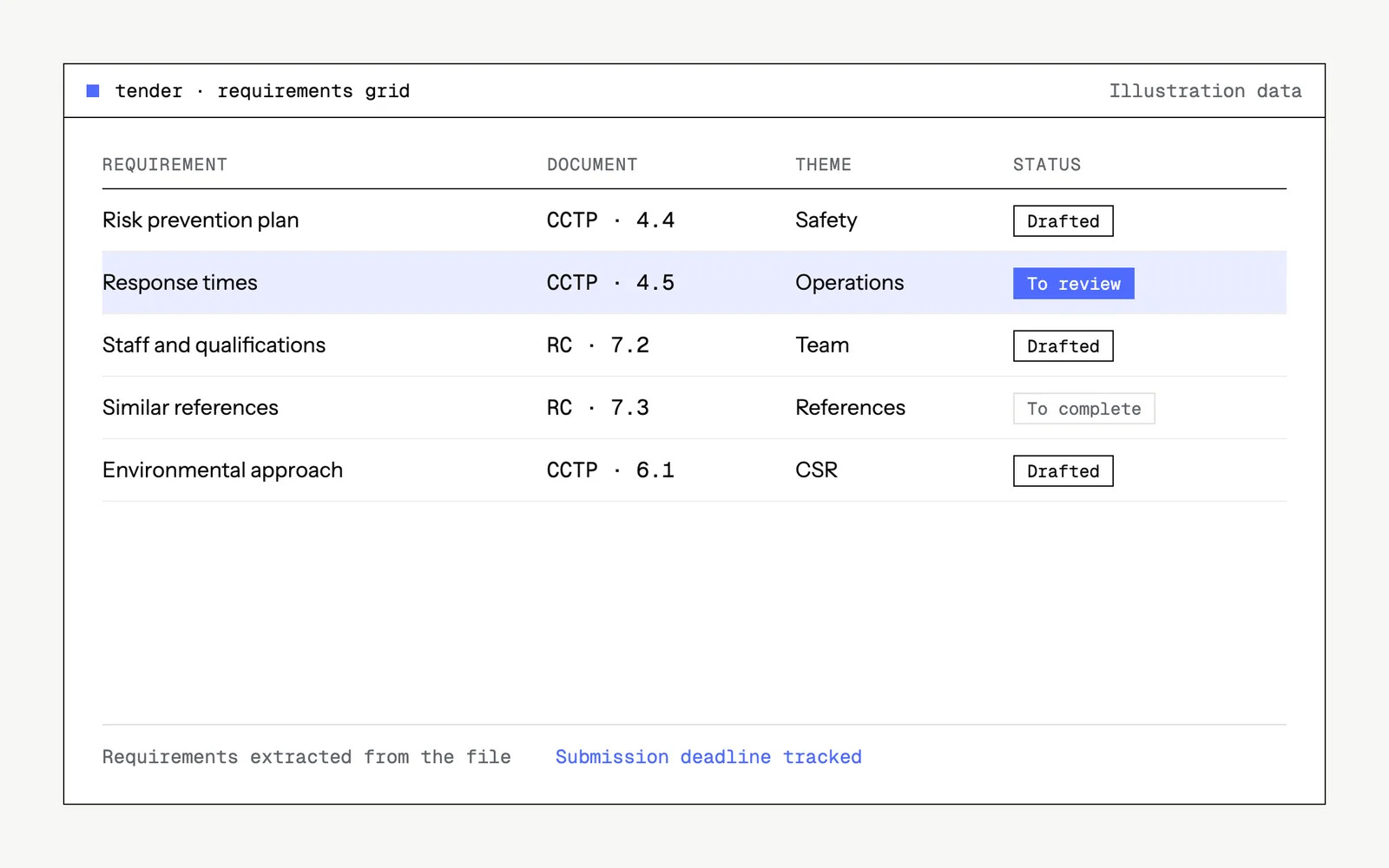
The team responding to a call for tender uploads the tender documents; the tool extracts the requirements, sorts them by theme, prepares the analyses and tracks the production of the response deliverables. The use case is being piloted with the team concerned.
Context
A large energy group regularly responds to calls for tender to build power plants and grid connections, with bulky tender documents.
The problem
Reading the entire tender file, missing no requirement and producing the response documents on time ties up many people in reading tasks.
What we built
One workspace per call for tender: upload of the tender file, profiling of each document, extraction of requirements into a grid, specialised analyses triggered by phase, a buyer profile built from web searches, and tracking of deliverables and exchanges. Business specification of 17 workflows provided by the client.
Steps
- 01Upload and profiling of the tender documents
- 02Extraction of requirements into an editable grid
- 03Phase-by-phase analyses and buyer profile
- 04Tracking of the response deliverables
Hosting and models
OVHcloud private cloud in France (managed Kubernetes, PostgreSQL, S3 storage, Gravelines data centre). Main model Qwen3.5-397B served by OVHcloud AI Endpoints. The platform gateway also declares Claude models via AWS Bedrock (EU and US regions).
Services involved
Agentic platforms · Forward Deployed Engineers
We name a client only with their written agreement. The budgets and detailed results of our engagements remain confidential.