Energy
Requirement-by-requirement analysis of bids received by a buyer
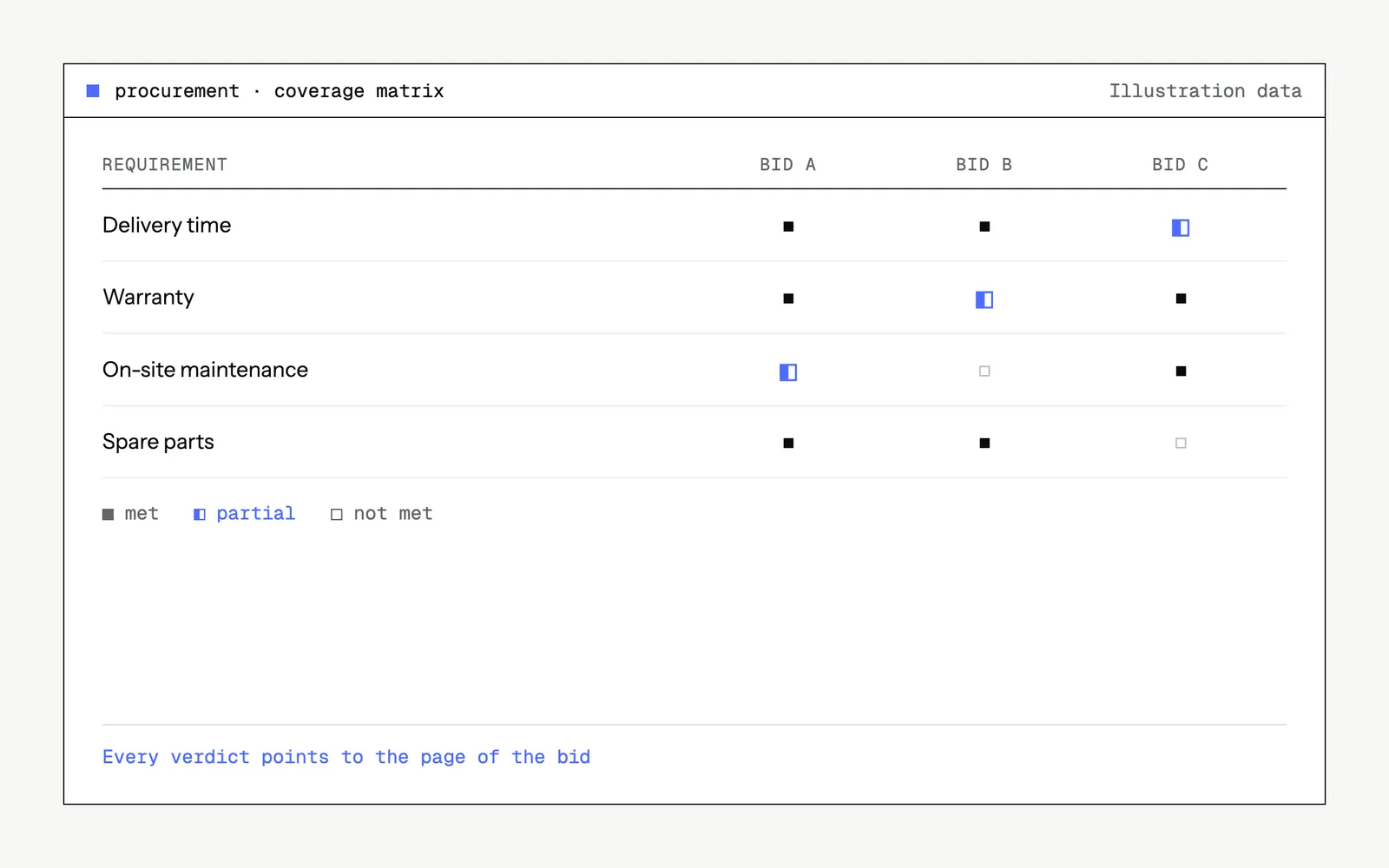
When the group runs its own tender, the tool extracts the requirements from the specification and then rates each bidder's response, requirement by requirement, with the page that justifies the verdict. Buyers get a coverage matrix that can be compared from one supplier to the next.
Context
To build its projects, a large energy group runs its own calls for tender and receives several bulky technical bids.
The problem
Comparing several bids of hundreds of pages against dozens of requirements, while keeping track of what justifies each assessment, takes days of analysis.
What we built
A buyer-side tender management module: extraction of requirements with source page, rating of each bid per requirement (fully met, partially met, not met, deviation, off-topic), coverage matrix, clarity check of the specification, questions before publication, contradiction detection, milestones and exports. An automatic quality audit scores each file. Business specification of 19 modules provided by the client.
Steps
- 01Extraction of requirements from the specification
- 02Upload of the bidders' offers
- 03Rating of each bid requirement by requirement, with justification
- 04Coverage matrix, exports and automatic quality audit
Hosting and models
OVHcloud private cloud in France (managed Kubernetes, PostgreSQL, S3 storage, Gravelines data centre). Main model Qwen3.5-397B served by OVHcloud AI Endpoints. The platform gateway also declares Claude models via AWS Bedrock (EU and US regions).
Services involved
Agentic platforms · Forward Deployed Engineers
We name a client only with their written agreement. The budgets and detailed results of our engagements remain confidential.